Showing posts with label classwork. Show all posts

Saturday, August 18, 2012

Reflections


I have enjoyed working with each of you over these past weeks.  While things did not always go as we had hoped in regards to the connections we were able to make internationally, we have been able to connect and support each other through our blogs and discussions.  I am taking a break this fall from classes, but will still check in on you all once in a while.  I will also continue to post to my blog (although, maybe not weekly!)

So what have I learned these past weeks in regards to the international early childhood field? 
·         Things do not always go as planned.
·         Everyone’s time schedules for responses are different. 
·         Many of the issues we face in the US are also global issues with different cultures and contexts (poverty, diversity, etc). 
·         There is a common understanding of the importance of early childhood education and care.

Saturday, August 11, 2012

UNESCO

UNESCO (United Nations Educational, Scientific and Cultural Organization)
One of their focuses is Education with a sub-theme interest in strengthening early childhood systems.

This week I spent some time exploring this portion of UNESCO's work.  There are links for their mission, strategies for achieving their mission, the history, policy briefs, country profiles, and more.  There are four areas that UNESCO has placed their focus in working in Early Childhood.  They are: Access & Equity, Quality, Investment & Financing, and Coordination & Integration.

Assessiblity to quality early childhood care and education is greatly important to me.  But this access in my opinion needs to be for all and not just the poor or not just the advantaged.  Because of this, I looked into this area with some depth.  There is an article on Vietnam's early childhood policy from 2005.  While the report is dated, it did provide some interesting information.

Vietnam has a pro-poor policy for early childhood.  Their early childhood programs (for children birth through 5 years old) are available for children of all economic statuses yet 42% are "state" meaning there is no fee to attend, these are for the "poorest" children.  Then there are semi-state schools (48%) where families must pay a fee, which covers the teacher's salary and the balance is covered by the state.  The remaining schools are "people-founded" or "private" and although they receive no financial support from the state, the state sets standards, monitors & evaluates the programs.  Sounds a bit like the U.S.  BUT ....  the final question posed and answer must be shared:

Choi: Finally, although many challenges remain, Vietnam seems to have been successful in developing and implementing concrete pro-poor early childhood policy measures. What would you single out as the success factors?
Tuyet: In Vietnam, the Ministry of Education and Training is responsible for the entire early childhood age group, and is the lead sector for early childhood. This makes it easier to develop and implement policies and monitor progress. We do not have to waste effort on coordinating different initiatives by different sectors. More important, the state has always been committed to investing in early childhood. This has made it possible to cater for the early childhood needs of the poorest. Without state investment, the equity issue cannot be tackled efficiently.
This is where the U.S. differs.  We have not be able to develop one unifying governmental leader and there isn't a strong commitment on the government's part for investing in early childhood.  We do have funds and some leadership, but it isn't enough.

While I am passionate about this issue.  I am not sure what kind of a voice I have in making a difference.  My primary goal in early childhood is to see that all children have the ability and opportunity to participate in quality early childhood care and education from birth through Kindergarten.  I thought my means to see this happen was through the road of preschool director.  Now I don't know.  I wish I did, but I don't.

Saturday, August 4, 2012

The NAECTE ... part 3


One last section of the NAECTE website to explore with all of you is their links to related organizations.  Most of the links are to varying organizations related to teacher education, but the first that caught my eye was one titled “Certification Map.”  It took me here

“Certification Map is a simple guide to receiving teacher certification and clarifies the steps needed to become a teacher in your state.”  Since I seem to battling this issue right now and trying to find clear information regarding North Carolina, this seems to be the answer!  So North Carolina … But … all the information is for elementary or secondary certification.  Which isn’t any help for me figuring out North Carolina’s new Birth to Kindergarten license.  I strike out again.

The NAECTE also provides links to a few organizations from other areas of the world including Australia, Canada, and Europe.  The organization in Europe is based out of the University of Sweden with the objective “to establish a flexible multilingual transnational forum for the development of teacher education in Europe linking together as many universities and other institutions as possible.”  Not only have the connected a great area of Europe they have members in Canada, China, Israel, Cyprus, Hong Kong, and the US.  But another strike out, the links to the members do not work.

But then … I think I have found the jackpot in the Early Childhood Australia.  Right on their home page “ECA will advocate to ensure quality, social justice, and equity in all issues relating to the education and care of children from birth to eight years.”  This is exactly what we are talking about in my current class!  I found a media release from June 2012 stating “Any changes to the funding of childcare should focus on benefiting low and middle income families and on improving the wages and conditions of the people who work in these services.” 

Hmmm sounds like what I have been reading these past few weeks about the U.S.  I guess in some ways it is nice to hear that all countries are dealing with the same things, but overall it would be wonderful to know there is a place in this world that has it figured out.  That there is a country that supports children, values them, and desires the best for them.  

Friday, July 20, 2012

The NAECTE … part 2


The National Association of Early Childhood Teacher Educators (NAECTE) is found at www.naecte.org.  This is my second week discussing this organization and their website.  Check out the first week here

I was a bit disappointed on my further inspection of the organization because in order to get my hands on most things of interest, I need to be a member.  At this point, I am not able to afford the membership, so I am left not being able to see most of their resources for teacher educators.

The organization does offer something called ResearchNets to “facilitate scholarly pursuits on collaborative research projects.”  This is a community network to allow access to other’s research while you are working on your own, allowing for collaboration and conversation on the topics.  The two active ResearchNets are “Teacher Research” and “Technology in Early Childhood Education.” 

Other areas of the site that I can access are


  • The NAECTE Foundation
  • which raises funds to advocate, support research projects, and offer scholarships,
  •  Job Announcements (Which they currently have a great opportunity in Baltimore Maryland…), and


There is a page containing five documents, which are their position statements, by-laws, and policies.  Happily, the Position Statement reiterates everything that I have learned about early childhood appropriate practice and the importance of certification of our early childhood teachers. 

What I found interesting was their second document: The Early Childhood Teacher Certification Toolkit.  This toolkit is put together to help individuals or groups battle the powers that be in seeing appropriate laws and requirements be put in place to support the position statement.  While we all may not be fighting this particular battle, it is a great resource to read through (or skim), because it provides support and encouragement to persist and know that change happens, even if it seems like a grueling long process…. Something that I need to remember in my current state of unsurity of my future in early childhood.  Now I am going to get back to re-reading that first letter of the toolkit!

Saturday, July 14, 2012

International Contacts and Poverty


I have a big bummer to share with you all.  I haven’t heard back from my contact.  L  I’m hoping in 2 weeks time I will hear from my contact from England and another from Costa Rica.

Since I haven’t heard back from my England contact … which I suspect will happen tomorrow!  J … I decided to look up some information about England and poverty and how does it compare to where I live in the U.S.?  I came across the site Child Poverty Action Group.  They state that 27% of children in England (in 2010/11) live in poverty with higher concentrations in different areas of the country.  Which is similar to U.S. statistics of 21.6% in 2010

In the U.S. the poverty level is a national level of income based on the size of the family and the ages of the members and was originally developed in 1963 based on the U.S. Department of Agriculture’s designated food budgets and what portion of their income was spent on food.  In 2011 that financial number was determined to be $23,018 for a family of four.  Which is currently equal to £14787.36. 

So how is poverty defined in England?  Where do they get their number?  The Poverty Site reports the poverty level to be determined to be “60% or less of the average household income in that year.” In 2008 that equaled £288 a week or £14976 a year for a family of four.  

While the years are off by 3 and the means of determining our poverty thresholds are different, they numbers come out fairly similarly.  England reports having more children living in poverty in the U.S. and through doing a simple search I found numerous resources on how both countries are combatting poverty similarly and the effects of a child growing up in poverty are the same. 

My prayer is that one day our upper-class citizens will find a way to live a simpler life and help out those who are suffering so deeply.  Just yesterday I was reading with my daughter the passage in the Bible about giving to the least of them was giving to Jesus found in Matthew 25:35-41.  There really is no excuse for the wealthiest countries to have this concern.

Friday, July 6, 2012

Taking a look at NAECTE … part 1


This is my first week sharing information with you about my selected organization.  The National Association of Early Childhood Teacher Educators (NAECTE) is found at www.naecte.org.  NAECTE was created and is sustained by members with a common interest in teacher education.  Their purpose is to promote professionalism, professional growth, advocate, discuss issues, share information, and provide a Journal and Conferences to support  growth and learning in the field. 

I first looked for a newsletter that I could subscribe to and found that they produce a newsletter quarterly.  I was disappointed because I wouldn’t be receiving weekly updates from the organization.  The most recent newsletter is dated Summer 2012 and its main focus is on preparation for the Professional Development Institute from the beginning of June.  The NAECTE meets during the NAEYC’s Professional Development Institute and the NAEYC’s fall conference. The newsletter also included highlights from 3 regional reports.  The highlight for me was the focus on Growing up WILD: Exploring nature with young children.  I had heard about this resource, but their information clarified the purpose of the resource in helping educators bring kids into nature and feel confident in the process. 

My next exploration into this site was their Journal of Early Childhood Teacher Education.  Through my studies already, I have used this journal in locating additional information.  The purpose of the Journal is to “provide a forum for consideration of issues and for exchange of information and ideas about research and practice in early childhood teacher education.”  Currently there is a call for papers for a special edition titled “Early Childhood Teacher Education: Why does it matter?  How does it matter?”  This may be one that I need to get my hands on when it comes out!

The primary issue or trend that this organization is focused on is the development of quality teacher education programs.  There are three policies that they state should be included in every certification agency and school district. 
1.      Require an early childhood certificate and/or endorsement for those teaching in classrooms for children five years old and younger in state funded pre-kindergarten and in kindergarten programs.
2.      Give priority in hiring and placement to teachers with an early childhood certificate and/or endorsement for public school classrooms for six, seven, and eight-year-olds (1st, 2nd, and 3rd grades).
3.      Require that early childhood certification and/or endorsement be based on completion of teacher preparation programs that meet professional preparation standards consistent with those established by the National Association for the Education of Young Children (NAEYC).

Stay tuned for more information about this organization in future blog posts!  AND – I did find a professional contact!  Next week I hope to share some information with you from a home-child-care provider in England.

Saturday, June 30, 2012

Professional Contacts & Exploring Websites


So this week’s assignment for my new class “Issues and Trends in Early Childhood” has not gone as expected.  We were assigned the job of locating two professional contacts outside the United States to be in conversations about issues and trends they see in the field of early childhood.  While I was hesitant at first, I tried with all my might to find someone to dialog with.  I contacted three prospects and haven’t heard back from any of them.

I tried for England, Madagascar (because of the relationship with friends working there with the Lutheran church), and Australia.  The England contact is an ECE worker who I love reading her blog.  Madagascar contact was through UNICEF.  And the Australia contact was through the University of South Australia.  I was shooting for being well rounded …. Hmmm … didn’t pan out the way I had hoped.  I am going to try a few other possibilities and see what turns up. 

At the same time I will also start pursuing the alternative option and get hooked up with the World Forum.  Let’s see in two weeks what can happen.

The second part of my blogging assignment is to choose an early childhood website to explore and learn.  I have chosen to explore the National Association of Early ChildhoodTeacher Educators’ website.  What was the deciding factor is when I looked at their purpose statement it spoke volumes to me right away.  The two directions I think my journey is taking me is 1st to teach new teachers; help them learn appropriate practices for the classroom, and/or work to make it more affordable for teachers to gain the needed skills.  2nd is to own my own childcare center that is faith based yet runs full day and is available for those who aren’t ‘poor’ but need to work full time to make it in our changing economy.  NAECTE seemed to fall right into place with both of those possible paths.  Then again, God still may have something different in store for me….

I can’t wait to hear how my classmates did on finding some professional contacts and which websites they chose!  Here’s to a new journey for the next 8 weeks!  (Sometimes it feels like my life lately is based on 8 week intervals….but it’s all going to be worth it!)

Sunday, June 10, 2012

My Supports


Who supports me?
First I need to look at what support means … dictionary .com defines support:
  • To bear or hold up; serve as a foundation for.
  • To sustain or withstand without giving way; serve as a prop for.
  • To undergo or endure, especially with patience or submission; tolerate.
  • To sustain under trial or affliction.
  • To maintain by supplying with things necessary to existence; provide for.

Supports are those people and things who are there with me holding hands with me.
First, my faith supports me.  God is my sustainer and provider. 
Surely God is my help; the Lord is the one who sustains me.  Psalm 54:4
The Son is the radiance of God’s glory and the exact representation of his being, sustaining all things by his powerful word.  Hebrews 1:3
Second, my husband is always there for me, for thick or thin!  While there are bad times and good times, he holds me up, he tolerates me, he provides for me.
My parents are another source of sustenance.  They are always there to talk, to care for me, to help watch their grandchildren, to provide home and food when it was needed, and have always walked with me through my trials.
I also need to add my children.  They sustain me by giving me a reason each day for what I do.  God  gave me these precious children as a gift.  They are the reason that I get up each day and help them grow to their greatest potential.
My church community is another source of support.  Most importantly, they help me maintain my relationship with God.
Another support is my phone … and it’s not even to call people … my calendar is on it!  My calendar is my prop for remembering things.  I have a horrible memory and if it’s not written down then my brain likely won’t remember it.  J
I have Depression.  Too often this is seen as something just in the head, but it is a disability just like Multiple Sclerosis or Diabetes.  Every day I take medication to maintain my brain chemicals.  My medication is another support.  When I do not have it or it is not functioning correctly, I cannot get through the day.
If any one of these supports were to not be a part of my life, I would struggle greatly in leading my everyday life.  Often I forget that they are there surrounding me and encouraging me.  It takes an activity like this … writing them down … to help me remember what provides for me, gives me a solid foundation, and sustains me through every life event.

Friday, June 1, 2012

Recent Videos Discovered

Sir Ken Robinson -- "Do schools kill creativity?"
We are educating children out of their creativity 
Shakespeare was in someone’s English class…..


Another great one:
Stuart Brown -- "Play: How it shapes the brain, opens the imagination and invigorates the soul


Friday, May 25, 2012

Childhood Connections to Play


My mom was (and still is with my children) an incredible early childhood professional before it was a profession.  She would get on the floor and play with us, make games, promote crafts, and reading and music were essential, yet she would still send us away to do our own thing often.  I remember creating plays, making food from dirt, riding bikes up and down the street, heading to the creek to hop rocks, and walking through the woods and field by the radio station.  There are two memories stick out the most. 

The first is playing with the giant tinker toys!  They are just what you think.  Tinker Toys on steroids.  I can’t remember all the things that we would make with them, but the favorite was always a house.  As a product from the 80’s they are only available on ebay, yet my mom saved ours.  Some of the pieces are broken and we have a limited stash now, but my kids even love them … on the special occasions I get them out.  I still treasure these pieces of plastic. 
My kids playing with my old tinkertoys!
The second memory is the warmest day on record during Christmas break in the north!  Some of my friends were getting out their shorts … but that’s another story.  That day most of the neighborhood ended up at our house and my sister and I had brought out quite a few stuffed animals and had them hanging on our playset with ourselves.  Stuffed animals were a favorite of mine and I have passed that gene onto my son.  I remember in 6th grade (I think), my friend and I still played with our animals and even had a wedding between 2 of them.  LOL.

As a child I was given the opportunity to just go and play and was able to use my imagination and create some amazing stories in my head.  Even as I got older, I would use snow days as an excuse to act like a 5 year old and go make a fort, battle the younger kids for king of the hill, and make the largest snowman ever. 

This is something that I want to be able to give my children … and I think I am not doing that bad of a job of it.  Just this afternoon they were in the backyard playing with “ooze” (mixture of cornstarch and water).  At one point, my 7-year-old told my 9-year-old that she was going to be the nurse now.  Not sure how it related to the ooze, but they were using their imaginations. AND I wasn't quick enough to get the camera and document the white stuff everywhere.  :)

As much as play is important for their life, it is also important for me as an adult.  My passion is scrapbooking, yet do not find the time to engage in this creative outlet often enough.  This is where I am able to play, stretch my imagination, try different textures and color combinations, record stories and memories, and get totally lost in the endeavor that I forget to eat … or eat a whole bag of M&M’s because they are sitting next to me.  J  Here is a recent endeavor:  

Children need the freedom and time to play.  Play is not a luxery.  Play is a necessity.  - Kay Redfield Jamison

Play energizes us and enlivens us.  It eases our burdens.  It renews our natural sense of optimism and opens us up to new possibilities.  - Stuart Brown

Wednesday, May 2, 2012

New Classmates!

I had a wonderful week off of school last week.  We just got back from a family camping trip and I am ready to dive right into my next class "Effective Programs and Practices."  Hello to my new classmates for the next 8 weeks and here's to the journey!

Saturday, April 14, 2012

My new blog life

When I started on this educational journey in January, I also started on a journey of reading blogs.  I am now subscribed to (I think) 16 blogs all about teaching preschool and the ideas that they develop - or borrow - and how they worked in the classroom.  Working with 2- and 3-year-olds can be hard in that their developmental levels are so varied.  Books do not always provide the ideas that work, since they are focused on the text-book child that doesn't exist.  So you need to check some of these out.

teaching2and3yearolds.blogspot.com
Sand and Water Tables at http://tomsensori.blogspot.com/   He has some great videos of kids playing in his tables!
Another favorite  at  http://www.toddlerapproved.com/ 
I also need to say thanks to some of my new colleagues!  We are finishing our 2nd class on our way to receiving a masters in early childhood studies.  I an excited about continuing this journey with you!
Angie's Early Childhood Blog
Childhood Blog Blog Blog!
Developing Early Childhood
Early Childhood Education in the 21st Century
Southern Soul Rising
MusicWithMoss
stuckngermany
 
Oh ... and then there is pinning.... but we won't go there.  So between my school work, teaching and lesson planning, being a mom and wife, I have found time to blog and pin.   Ahhh, the world of technology!

Thursday, March 29, 2012

Getting Dressed in the Mornings!


To anyone who has not had young children in the home, this sounds like an easy task, but when there is so much learning going on at the same time, changing out of pajamas and putting on clean clothes for the day can often be a challenge. 
Biosocial development that is happening includes coordinating body movements as well as the left and right sides of the body and brain.  Gross motor movements include putting arms in sleeves, legs in pants, shirt overhead, or the opposite in taking off pajamas.  Fine motor skills are needed for zippers, buttons, snaps, gabbing and holding the clothing, and tying laces.
Cognitive development is occurring as children develop the sense of independence and “I can do it” mentality.  Their memory and language skills are at work in remembering what each piece of clothing is called, where it goes on the body, in which order does it go on and what body parts need to be controlled to get the clothes on or off.
Psychosocial development is seen in the child’s assertions of their opinions and development of a sense of self-worth.  They are also exploring gender in the clothing they are wearing.
All of this learning is occurring while the adult uses scaffolding to help the child develop these skills to be independent.  And oftentimes the adult is practicing a lot of patience.

This is from an assignment from last week - and just wanted to share!  :)  Enjoy!

Saturday, March 24, 2012

Malagasy Children and Child Labor


I have been blessed to not have endured stressors during my childhood.  I asked my parents if they had and my dad shared a story with me I had never heard.  He was never allowed to ride a horse because my grandmother had been thrown off a horse and then stepped on by the horse.  As a result, my grandfather had to do the heavy lifting with the laundry because she had hurt her back.  While not a real huge stressor in childhood, it is a true example of how one incident can affect so much of your life.  In the 20’s and 30’s it was not common for the husband to help with the laundry.

I decided to look at Madagascar again, as that is where our friends are serving.  Check out their amazing journey here.  Some of the great stressors on childhood in Madagascar are: violence against children, forced marriages for girls, forced child labor, lack of care, environmental issues, and discrimination.

Through my reading I found the term “Worst Forms of Child Labor” which includes slavery (sales, trafficking, serfdom, forced labor, using children in armed conflict), Sexual exploitation of children (prostitution & pornography), and using children for illegal activities.

The question is posed “Why is it urgent and important to take action against the worst forms of child labor?  Their answers include:
  •  It is a matter of human rights
  • It is a matter of saving lives.
  • It is a matter of combating some particularly odious forms of organized crime.
  • It is a matter of protecting children from the horrors of war. 
  • It is a matter of building a nation’s future.
  • It is a matter of international concern.
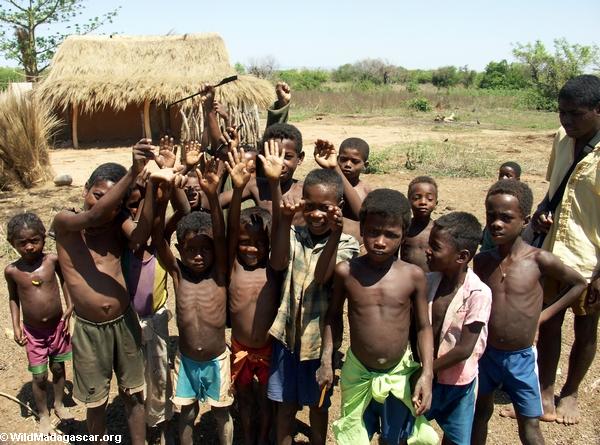
Photos of beautiful Malagasy children
In Madagascar the child labor imposed on nearly 1.9 million children involves sexual exploitation of children, work in stone quarries and mines, domestic servitude, farm and fishing industry work, and other work in dangerous and unhealthy urban and rural jobs.  This represents 20% of 5-9 year olds and 50% of 10-14 year old children are exposed to these labor conditions.

Madagascar has ratified the Convention on the Rights of the Child, and are in the very beginning stages of enacting government procedures to protect children.  January 20, 2012 the United Nations considered the Madagascar report and their dialogue is posted here.

Along with the governmental work, Pact, a non-profit is working in Madagascar to use education to combat child labor.

Saturday, March 10, 2012

Access to Healthy Water


Two summers ago, our Vacation Bible School decided to choose this issue to talk with the kids about and raise funds.  Through the one week, we raised over $600, which went to Lutheran World Relief to help build wells for communities. 
Water is one of the necessities for life. (I’m singing “The Bare Necessities” in my headJ).  Many in the western world take the abundance of clean water for granted, my family included.  We turn on the faucet and there is water to drink, clean with, cook with, or do whatever we want with.  We can even choose if we want the water hot or cold. 
I decided to look at some websites and see if they had published materials on the topic (I was sure they had …and they did.)  The World Health Organization (WHO) has published “Guidelines for drinking-water quality.”  As described by the United Nations (UN) this is a set of “international norms on water quality and human health in the form of guidelines that are used as the basis for regulation and standard setting, in developing and developed countries worldwide.”
I decided to look up information on Madagascar.  We have some friends who have recently begun a 4 year stay there and so thought this would be a great place to see how their water rates.  WHO has an office in Madagascar and some information including in a  Health Profile, which compares their numbers to the WHO African Region.  As of 2002 75% of the urban population had access to an improved water source and only 34% in rural areas.  These are lower percentages than the WHO African Region, which means there is still work to do.   One of the WHO’s millennium goals in Madagascar is to improve access to an improved water source, although I was not able to find information on how they are going about this work.  A correction.  The materials may be there, but they aren’t in English, so I don’t know if they exist or not.
The UN is currently near the end of their decade focus on water.  The Water for Life section has a site specifically dedicated for educating kids about different water issues.  I think I will be getting my kids linked in here … and start some conversations in our home as to how we can do our part.

Sunday, March 4, 2012

Birth


I have birthed three children.  Each has its own unique story and none of them happened the way I had planned.  I have a strong belief that women have been birthing babies longer than most ventures in life and without medical interventions.  We have medicalized so many aspects of life that do not need to be.  That said, I did not want to birth my children in a hospital setting.  We were living in Delaware, USA.  The options based on law are hospital birth or one available birth center. 
We chose the birth center and had wonderful mid-wives throughout the pregnancy experience.  My first child was born there.  Unfortunately it wasn’t the birth I had hoped for.  When I was in the beginning stages of labor, the midwives had given me something to help me sleep through the night so I would have the energy come active labor the following day.  Labor kicked in strong in the middle of the night.  I had a very difficult time staying awake through labor and it took much longer as I slept through every other contraction.  When he was born, as I am holding him in all his yucky newborn self, all I could think is “Hallelujah, now I can sleep!”  Not the best response when you have a newborn ready for your love and attention!
My second and third were in the hospital setting (in 2 different states).  Baby 2 was in the hospital because when my water broke there was a ton of meconium in the fluid thus (by law) necessitating the need to be hospitalized.  My nurse there had never witnessed a non-medicated birth, and thus had no idea how to interact with me while I was in active labor (i.e. asking me about a living will).  Strapped to machines, they didn’t want me sitting up, let alone getting out of bed.  Due to various unexpected factors, I was not able to hold her until she was 1 hour old.  This hospital in many ways was a baby factory … 300-400 births a day.  During our stay, I shared a room with another woman in a room meant to be a single.  arrgh
Baby 3 was born in the hospital. I had found a wonderful OB and knew that she would support us in all ways that I desired as far as birth was concerned.  I also knew the hospital respected natural birth.  They had a couple rooms with tubs!  J  But again, the best laid plans … She needed to be induced early because my blood pressure was skyrocketing.  Once again I was strapped up to machines with a cuff that took my blood pressure no matter if I was in the middle of a contraction or not.  I was able to labor in many various positions … only needing to maneuver the cords around which the nurse and my husband were wonderful about.  When she was born I waited maybe 5 minutes to hold her.  My stay in the hospital was wonderful.  I almost didn’t want to go home, the nurses took such great care of both of us … and I would be heading home to 2 children under the age of 5!
We decided to stop after 3 babies, not knowing what the birth of a 4th would do to my body … or what that experience might be like.  All 3 of my children are beautiful and healthy, so even if their births weren’t what I had planned, they are a welcome joy in my life!
With my best intentions of having a non-medicalized birth … it didn’t happen.  So what about other areas of the world?  They must not all be as medicalized as mine?  I decided to look at another developed country with a large population and found Japan.
I found the story of Andy Gray and their birth experience in Japan after having given birth to their first child in the United States.  Their story and more information is found at http://www.globalcompassion.com/japan-birth.htm 
Some of the highlights:  doctors in Japan do not have the social status they do here in the US.  They have the income without the status and thus seek the status and control in their role.  Many OB doctors take care of prenatal care, delivery, and newborn care in their hospital setting.  You don’t make an appointment with the doctor, you just show up to see him and wait your turn (much like an emergency room set-up).  If the doctor needs to deliver a baby, you wait until he is finished for your time to see him.
“Doctors monopolize control of the birth process in most situations.”  Midwives work with the mother prior to delivery but the role of delivering babies is in the hands of the doctor.  It happens the way the doctor wants.  Nurses are not empowered and often lack basic information, they do what they think is right from their cultural perspective (not medical) and do whatever the doctor tells them to do.
The Maternity ward was a large room with beds around the sides.  Each bed separated by a curtain that is never opened.  Japanese people do not make noise in public spaces and so the ward was very quiet.
Fathers are not part of the birth process and are often an unwelcome presence.
So – is it a medicalized process?  Yes and No.  It is whatever the doctor wants!  The patient does not have a lot of say at all.
This has made me appreciate the choices that I was able to make, my ability to ask questions and stay a part of the process and not focus on the negative perceptions of the births of my children.

Tuesday, February 21, 2012

Week 8

This week is the final week of my first class in a two year journey.  I don't know where I will be in two years.  I don't know what I will be doing then.

Right now I am teaching in a two year old class with 2's and 3's.  It's not what I wanted to be doing, but I know that God has called me here for a purpose.... just not sure what yet.  After 3 months of teaching, I knew that I wanted more than the classroom experience.  I always have, but I've never been sure what that more was.  So this 2 year process of working on my masters will help me discern where and in what means I am supposed to leave my imprint on the field of early childhood.

Thank you for everyone in my class who has supported me and my journey these past 8 weeks.  I look forward to more learning and conversation with you through our blogs!