Showing posts with label children. Show all posts

Saturday, July 28, 2012

ECCE Internationally


So I was really excited that I would be communicating with a professional in England, but that has not come through.  Although, watching the Opening Ceremony of the Olympics in London last night I was thrilled to see all the children that were incorporated into the event.  Children truly are viewed as the future of the country and it is clear that they are valued.  


Fireworks are set off around the Olympic Stadium
What an amazing image to help us all remember that around the world, we are a group of people.  No matter how different we may be, we are all human and all have the same needs.  And we can come together an unite around one central purpose ... whether it be the Olympic Games or early childhood care and education

Ok ... enough about the Olympics ... Since I have not heard back from my contact, I started this post out by reading Volume 11 of the online journal Current Issues in Comparative Education.    The focus on this volume is the worldwide challenges and accomplishments in the field of early childhood care and education.  Two articles focus on countries in Africa and two focus on Brazil.  The second resource that I looked at was the Center on the Developing Child's Global Children's Initiative.  

What I have come away with from these readings:
  • While ECCE is a global need, the implications on different neighborhoods varies greatly!  There is a common understanding that quality ECCE is the foundation for an individual's future life expectations, successes, and path in life.  How this knowledge is used varies depending on where you live.
  • In Zambia, there is an understanding of the need of ECCE and Primary education, but the government has not been able to provide quality or effective care in this poor nation.  The author of this article recommends that the country not pursue ECCE until the nation develops a better system of education for children of basic and primary ages.  (published 2009)
  • In Brazil, their ECCE program seem to be doing well and reaching families and children because there is a partnership between family, community and coordinated efforts.  There is a focus on reaching children where they are in their current context.  While the information about ECCE is generated in other countries, they are taking the information and applying it to their culture and situation.
  • How exciting to read that the Center on the Developing Child hosted a leadership training on early childhood development for 50 Brazilian politicians, policymakers, public managers, and civil-society leaders so that they can develop programs and initiatives to positively impact the children in their county!  They are bridging the gap between what we know and what we do!
  • This is all information that we need to take to heart in the US as ECCE is being held in front of our policy makers and is being put to the test in regards to funding.  While defense may be able to keep their funds, the rest of the education and domestic program may loose their government funding because we do not have the voice in Congress that Brazil has in their  government.  Check out this great blog!
I could continue, but you have to stop somewhere.

Saturday, July 14, 2012

International Contacts and Poverty


I have a big bummer to share with you all.  I haven’t heard back from my contact.  L  I’m hoping in 2 weeks time I will hear from my contact from England and another from Costa Rica.

Since I haven’t heard back from my England contact … which I suspect will happen tomorrow!  J … I decided to look up some information about England and poverty and how does it compare to where I live in the U.S.?  I came across the site Child Poverty Action Group.  They state that 27% of children in England (in 2010/11) live in poverty with higher concentrations in different areas of the country.  Which is similar to U.S. statistics of 21.6% in 2010

In the U.S. the poverty level is a national level of income based on the size of the family and the ages of the members and was originally developed in 1963 based on the U.S. Department of Agriculture’s designated food budgets and what portion of their income was spent on food.  In 2011 that financial number was determined to be $23,018 for a family of four.  Which is currently equal to £14787.36. 

So how is poverty defined in England?  Where do they get their number?  The Poverty Site reports the poverty level to be determined to be “60% or less of the average household income in that year.” In 2008 that equaled £288 a week or £14976 a year for a family of four.  

While the years are off by 3 and the means of determining our poverty thresholds are different, they numbers come out fairly similarly.  England reports having more children living in poverty in the U.S. and through doing a simple search I found numerous resources on how both countries are combatting poverty similarly and the effects of a child growing up in poverty are the same. 

My prayer is that one day our upper-class citizens will find a way to live a simpler life and help out those who are suffering so deeply.  Just yesterday I was reading with my daughter the passage in the Bible about giving to the least of them was giving to Jesus found in Matthew 25:35-41.  There really is no excuse for the wealthiest countries to have this concern.

Friday, May 25, 2012

Childhood Connections to Play


My mom was (and still is with my children) an incredible early childhood professional before it was a profession.  She would get on the floor and play with us, make games, promote crafts, and reading and music were essential, yet she would still send us away to do our own thing often.  I remember creating plays, making food from dirt, riding bikes up and down the street, heading to the creek to hop rocks, and walking through the woods and field by the radio station.  There are two memories stick out the most. 

The first is playing with the giant tinker toys!  They are just what you think.  Tinker Toys on steroids.  I can’t remember all the things that we would make with them, but the favorite was always a house.  As a product from the 80’s they are only available on ebay, yet my mom saved ours.  Some of the pieces are broken and we have a limited stash now, but my kids even love them … on the special occasions I get them out.  I still treasure these pieces of plastic. 
My kids playing with my old tinkertoys!
The second memory is the warmest day on record during Christmas break in the north!  Some of my friends were getting out their shorts … but that’s another story.  That day most of the neighborhood ended up at our house and my sister and I had brought out quite a few stuffed animals and had them hanging on our playset with ourselves.  Stuffed animals were a favorite of mine and I have passed that gene onto my son.  I remember in 6th grade (I think), my friend and I still played with our animals and even had a wedding between 2 of them.  LOL.

As a child I was given the opportunity to just go and play and was able to use my imagination and create some amazing stories in my head.  Even as I got older, I would use snow days as an excuse to act like a 5 year old and go make a fort, battle the younger kids for king of the hill, and make the largest snowman ever. 

This is something that I want to be able to give my children … and I think I am not doing that bad of a job of it.  Just this afternoon they were in the backyard playing with “ooze” (mixture of cornstarch and water).  At one point, my 7-year-old told my 9-year-old that she was going to be the nurse now.  Not sure how it related to the ooze, but they were using their imaginations. AND I wasn't quick enough to get the camera and document the white stuff everywhere.  :)

As much as play is important for their life, it is also important for me as an adult.  My passion is scrapbooking, yet do not find the time to engage in this creative outlet often enough.  This is where I am able to play, stretch my imagination, try different textures and color combinations, record stories and memories, and get totally lost in the endeavor that I forget to eat … or eat a whole bag of M&M’s because they are sitting next to me.  J  Here is a recent endeavor:  

Children need the freedom and time to play.  Play is not a luxery.  Play is a necessity.  - Kay Redfield Jamison

Play energizes us and enlivens us.  It eases our burdens.  It renews our natural sense of optimism and opens us up to new possibilities.  - Stuart Brown

Saturday, April 14, 2012

My new blog life

When I started on this educational journey in January, I also started on a journey of reading blogs.  I am now subscribed to (I think) 16 blogs all about teaching preschool and the ideas that they develop - or borrow - and how they worked in the classroom.  Working with 2- and 3-year-olds can be hard in that their developmental levels are so varied.  Books do not always provide the ideas that work, since they are focused on the text-book child that doesn't exist.  So you need to check some of these out.

teaching2and3yearolds.blogspot.com
Sand and Water Tables at http://tomsensori.blogspot.com/   He has some great videos of kids playing in his tables!
Another favorite  at  http://www.toddlerapproved.com/ 
I also need to say thanks to some of my new colleagues!  We are finishing our 2nd class on our way to receiving a masters in early childhood studies.  I an excited about continuing this journey with you!
Angie's Early Childhood Blog
Childhood Blog Blog Blog!
Developing Early Childhood
Early Childhood Education in the 21st Century
Southern Soul Rising
MusicWithMoss
stuckngermany
 
Oh ... and then there is pinning.... but we won't go there.  So between my school work, teaching and lesson planning, being a mom and wife, I have found time to blog and pin.   Ahhh, the world of technology!

Saturday, April 7, 2012

Intelligence Testing

My family of geniuses trying to figure out the best way to erect a 20 foot Christmas tree of only lights.... I stayed away and let my husband join the fun!


The combination of genetics and environment has worked well for my family.  I grew up in a family of three where my father has a PhD (bio-physics at that!), my sister and I tested into gifted programs in elementary school, and my brother is brilliant.  My own children are doing amazingly well in school and continue to be at the top of their classes (in 1st and 3rd grade). This is why I went into education.  In particular my brother…  As I said he is brilliant!  He also has a learning disability and in elementary school they would not do an IQ test because he was testing at needing to be in a resource room for reading.  He has struggled through school and does not like to be an advocate for himself.  I remember him understanding the concepts of algebra in preschool, yet reading and writing were difficult for him.  In High School he went to the School for Science and Math in North Carolina which is a residential school for juniors and seniors around the state to “where students study a specialized curriculum emphasizing science and mathematics.” 
I went into school with a focus on special education, thinking that it would include a focus on the low and high ends of the bell curve.  In fact, there is little known about those with a high IQ compared to the wealth of knowledge we have on those on the opposite end.  There are many commonalities between the two and what we have learned about education for one subgroup can easily be applied to any other subgroup (middle, high, low etc). 
The purpose of an IQ test is to determine a person’s mental abilities relative to others of the same age.  If you score below 100 you are mentally at a younger age than the average, same goes if you are above the average.  I was reading an article on this topic and realized that if we take the children who fall in the center portion of the bell curve, this includes all children from an IQ of 70 to 130.  All of these children are typically placed in the same classroom in the United States.  At 3 years old, their mean age has a disparity of 1.8 years.  By 6 years old the disparity is 3.6 years and at 12 the disparity has grown to 7.2 years.  What does this mean for educators?  I’ll let you come up with your own conclusions.    
We may not have a schooling system in the United States that meets our highest achieving students and helps them completely in the ways they need, but we do have a system that is beginning to see their needs and provide supports.  This is opposed to so many in the world, who are unable to attend school, let alone have an intelligence test done or receive supports on the low or high end of the bell curve.
I decided to keep my focus on Madagascar again and see what their education system is like.  They do have mandatory education for children 6 to 14.  Nevertheless, like I wrote before, child labor is rampant in the country and many children are not offered the opportunity for an education due to their work.  In 2000, 14% of the children continued their education and enrolled in secondary school (age 12 to 17).  The UNESCO has been working with Madagascar for the “Education for All” up until 2009.   The political unrest in Madagascar has limited the ability to help education all the children and poorer and rural areas definitely suffer more.
As an early childhood educator at heart, I have been trained to teach to each individual child’s strengths and weaknesses.  If all educators were to take that stance, we would be grouping children by strengths and weaknesses, not by their IQ or label.  Determining IQ and labels should only be used when more information about the child is needed, but even that does not always give needed information.  When we focus on strengths and weaknesses, we look at each individual child and developing an education plan for that child.  I know that there are a lot of politics and financial issues there, but that in my opinion is what is needed in the United States and around the world. 

Thursday, March 29, 2012

Getting Dressed in the Mornings!


To anyone who has not had young children in the home, this sounds like an easy task, but when there is so much learning going on at the same time, changing out of pajamas and putting on clean clothes for the day can often be a challenge. 
Biosocial development that is happening includes coordinating body movements as well as the left and right sides of the body and brain.  Gross motor movements include putting arms in sleeves, legs in pants, shirt overhead, or the opposite in taking off pajamas.  Fine motor skills are needed for zippers, buttons, snaps, gabbing and holding the clothing, and tying laces.
Cognitive development is occurring as children develop the sense of independence and “I can do it” mentality.  Their memory and language skills are at work in remembering what each piece of clothing is called, where it goes on the body, in which order does it go on and what body parts need to be controlled to get the clothes on or off.
Psychosocial development is seen in the child’s assertions of their opinions and development of a sense of self-worth.  They are also exploring gender in the clothing they are wearing.
All of this learning is occurring while the adult uses scaffolding to help the child develop these skills to be independent.  And oftentimes the adult is practicing a lot of patience.

This is from an assignment from last week - and just wanted to share!  :)  Enjoy!

Saturday, March 24, 2012

Malagasy Children and Child Labor


I have been blessed to not have endured stressors during my childhood.  I asked my parents if they had and my dad shared a story with me I had never heard.  He was never allowed to ride a horse because my grandmother had been thrown off a horse and then stepped on by the horse.  As a result, my grandfather had to do the heavy lifting with the laundry because she had hurt her back.  While not a real huge stressor in childhood, it is a true example of how one incident can affect so much of your life.  In the 20’s and 30’s it was not common for the husband to help with the laundry.

I decided to look at Madagascar again, as that is where our friends are serving.  Check out their amazing journey here.  Some of the great stressors on childhood in Madagascar are: violence against children, forced marriages for girls, forced child labor, lack of care, environmental issues, and discrimination.

Through my reading I found the term “Worst Forms of Child Labor” which includes slavery (sales, trafficking, serfdom, forced labor, using children in armed conflict), Sexual exploitation of children (prostitution & pornography), and using children for illegal activities.

The question is posed “Why is it urgent and important to take action against the worst forms of child labor?  Their answers include:
  •  It is a matter of human rights
  • It is a matter of saving lives.
  • It is a matter of combating some particularly odious forms of organized crime.
  • It is a matter of protecting children from the horrors of war. 
  • It is a matter of building a nation’s future.
  • It is a matter of international concern.
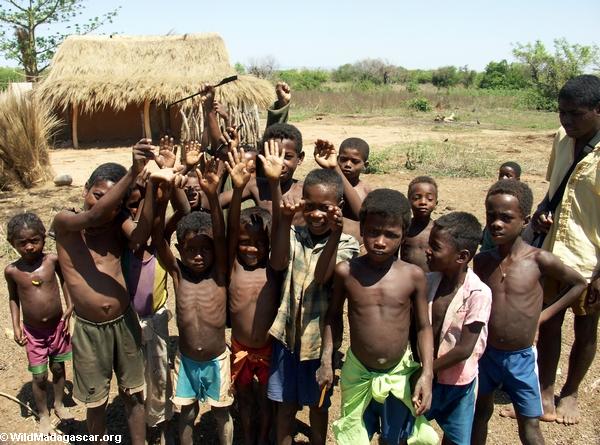
Photos of beautiful Malagasy children
In Madagascar the child labor imposed on nearly 1.9 million children involves sexual exploitation of children, work in stone quarries and mines, domestic servitude, farm and fishing industry work, and other work in dangerous and unhealthy urban and rural jobs.  This represents 20% of 5-9 year olds and 50% of 10-14 year old children are exposed to these labor conditions.

Madagascar has ratified the Convention on the Rights of the Child, and are in the very beginning stages of enacting government procedures to protect children.  January 20, 2012 the United Nations considered the Madagascar report and their dialogue is posted here.

Along with the governmental work, Pact, a non-profit is working in Madagascar to use education to combat child labor.

Saturday, March 10, 2012

Access to Healthy Water


Two summers ago, our Vacation Bible School decided to choose this issue to talk with the kids about and raise funds.  Through the one week, we raised over $600, which went to Lutheran World Relief to help build wells for communities. 
Water is one of the necessities for life. (I’m singing “The Bare Necessities” in my headJ).  Many in the western world take the abundance of clean water for granted, my family included.  We turn on the faucet and there is water to drink, clean with, cook with, or do whatever we want with.  We can even choose if we want the water hot or cold. 
I decided to look at some websites and see if they had published materials on the topic (I was sure they had …and they did.)  The World Health Organization (WHO) has published “Guidelines for drinking-water quality.”  As described by the United Nations (UN) this is a set of “international norms on water quality and human health in the form of guidelines that are used as the basis for regulation and standard setting, in developing and developed countries worldwide.”
I decided to look up information on Madagascar.  We have some friends who have recently begun a 4 year stay there and so thought this would be a great place to see how their water rates.  WHO has an office in Madagascar and some information including in a  Health Profile, which compares their numbers to the WHO African Region.  As of 2002 75% of the urban population had access to an improved water source and only 34% in rural areas.  These are lower percentages than the WHO African Region, which means there is still work to do.   One of the WHO’s millennium goals in Madagascar is to improve access to an improved water source, although I was not able to find information on how they are going about this work.  A correction.  The materials may be there, but they aren’t in English, so I don’t know if they exist or not.
The UN is currently near the end of their decade focus on water.  The Water for Life section has a site specifically dedicated for educating kids about different water issues.  I think I will be getting my kids linked in here … and start some conversations in our home as to how we can do our part.

Saturday, January 14, 2012

Stained Glass

I was cleaning out some folders this morning and I came across this picture that "C" made last year.  He was going through the God and Me class.  An assignment that he chose was to look at all the stained glass in our church and then draw his own picture.  This is what he did.  So simple and yet so true.  How great it is to remember that's how children think.  Simple and Honest.

Thursday, January 12, 2012

2 year olds


 The first few years of life are fun!  I have posted a picture of myself and each of my children "C" and "B" and "E" ... we are all at the age of 2 in these pictures.  I can look at them now and see their personalities beginning to shape and form into who we are now.

Now I am teaching 2 year olds.  Each child is so open to the future.  Trusting.  Hopeful.  Innocent.  That's how each child's life should start.  With the hope and promise of the future.

What does the future hold for my students?  Me?  My children?